KU Serenity Space
How can we provide effective and accessible mental health support for university students?
The idea began with the question of how students can easily access mental health support when needed. This led to developing a solution that provides personalized, timely, and stigma-free assistance.
.png)
Role:
Led the entire Lean UX process, focusing on user research, rapid prototyping, and iterative design to create a personalized mental health app.
Duration:
1 month
"Empowering students to take control of their mental well-being, anytime, anywhere."
Project Overview:
This project develops a mental health app for students, providing personalized tools like mood tracking, stress management, and mindfulness exercises. The app analyzes user input to offer tailored recommendations, helping students manage their mental well-being.
The Problem:
The current university website is text-heavy, lacking clear guidance and an intuitive structure, making it difficult for students to easily access relevant mental health support and resources
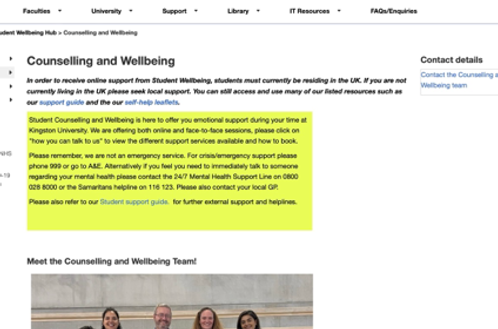

Blurred for privacy reasons
Target Users
-
Undergraduate & Postgraduate Students – Facing academic pressure and mental health challenges.
-
New Students – Adjusting to university life and seeking support.
-
International Students – Coping with cultural differences and loneliness.
-
Students with Disabilities – Needing tailored mental health resources.
-
High-Stress Majors – Those in demanding programs (e.g., medicine, law, engineering).
Faculty and university counselors could also be secondary users for insights and support integration.
Objectives of this Application
Instant Support
Quick anonymous help through messages.Student interaction – Making interaction possible through hangout plans or meetups for recreation.
Quick Resources
Providing right resources based on the analyses can help them on the right time.(self -help books, activities to induge in, community hangouts)
Mental Assurance
Daily boost can push anxious students
Professional Support
A recommended approach for students who are in need of support can let them get the support in time.
Secondary Research – Key Insights
I gathered secondary research data for this project to inform design decisions and enhance the user experience.
Only 1% of students felt their university was very supportive of mental health, while 86% reported poor mental health.
Students believe educational institutions have a responsibility of care.
Between 2016/17 and 2022/23, undergraduate students reporting mental health issues increased by 10%.


It is said that students often wait months or years to speak to someone about the problem, even though they need some help.
Barrier one: Seeking help requires you to admit that there’s a problem
Barrier two: Worrying you will be expected to know what the problem is.
Barrier three: Expecting to be blamed or judged for having the problem or the fear of solving the problem of your own.
Barrier four: Feeling your problem is big to fit into the number of sessions you expect to be offered.Barrier five: A worry about making yourself too vulnerable.
Primary Research – Interviews
Questions which I asked the participants?
Did you use KU wellbeing service ?
How is your regular day routine generally?
Did you use KU wellbeing service ?
What are the things which makes you feels stressed or tensed?

How do u think can university help u in managing your mental health?
What features do you think can help you deal with mental health management or support ?

What do you think are the best features which help you to deal with mental health issues ?
How do you manage the stress you experience?
What are your favorite activities to indulge in?
What makes you feel happy or relaxed after a busy day ?
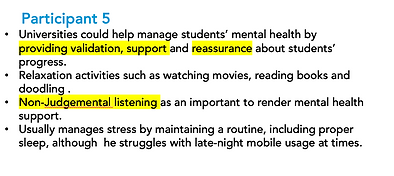
What do you think can be done to reduce or manage your stress?
What do you think can be done to reduce or manage your stress?
"Started the Think stage in Lean UX—where ideas are explored, assumptions are questioned, and the foundation for innovation is built!"
Affinity Diagram based on interview insights:
Affinity Diagram
Sources of Stress
Stress Management Strategies
Past Efforts to Seek Help
Desired Support Features
Expectations from University
Personal life and financial issues
Manages stress by replying on support from family
Engages in activities like gaming, socialising with friends and using social media
Tried seeking medical support but stopped due to the process being tedious and costly
Prefers quick and easy access
Proactive in providing personalised well-being support
Listening to music, evening walks
Tried applications online
Anonymous blogging and commenting
Official class groups
Watching movies, anime and series
Engaging in soothing activities
Leverages a variety of relaxing and enaging activities
Universities to foster a more interactive and supportive enivironment among students
"Assumptions are made based on the current problems to predict potential risks in the existing product. In this project, both business and user assumptions are created. These are based on the research done and framed according to the target's needs."
.jpeg)

.jpeg)

Other steps worked on , before starting feature prioritisation:
Persona


Feature Prioritisation -Bulls Eye Diagram

After prioritizing the results from the brainstorming session , there are few features which
Are finalized and fixed to be designed:
• Recommendations
• Communities
• Progress Tracking
• Ai bot
Mental Model
"Card sorting is used to analyze users’ mental models by understanding how they interact with my product, helping build better information architecture. It is used to reveal user expectations based on experience and create realistic experiences."
Platforms
Analysis
Home
Community
Chat bot
Notifications
Integrability
Mobile
Questions
Instant Help
Communities
Quick help
Meet - up updates
Audible Collabaoration
Tablet,Ipad
Progress Track
Resources
Recommendations
Suggested Recommendations
Quick help
Mood track
Message Suggestions
Motivation
Updates
Subscription

"Kicked off the make stage in Lean UX—where ideas transform into reality and prototypes come to life!"
Hypothesis table and Statements
"Tested assumptions are categorized as true or false, simplifying the product goal. A structured table organizes hypotheses into clear statements for better clarity."

Hypotheses Table


Hypotheses Statements

Hypothesis Prioritization Canvas
"Hypothesis prioritization helped to identify and focus on the most critical assumptions for the product. It ensured efficient testing by targeting hypotheses that drive impactful insights."

Information Architecture
"Through brainstorming and hypothesis testing, I have defined the MVP. Its information architecture showcases the product's potential, which is further tested for feasibility."
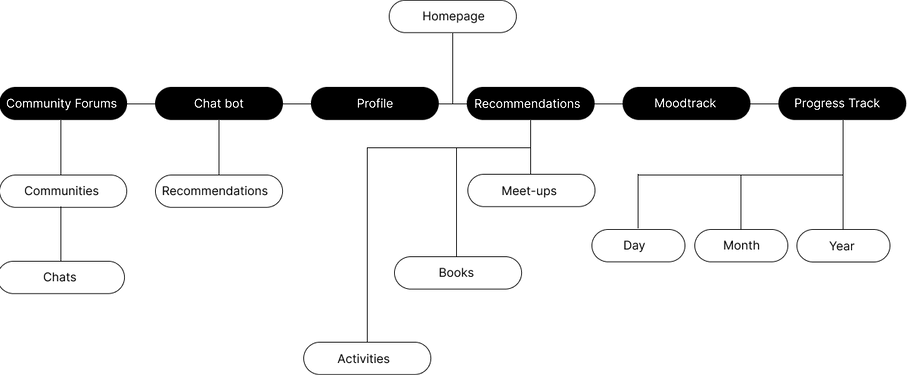.png)
Paper Prototype


"Created a paper prototype for testing saved time, allowed to quickly refine and modify ideas with ease."
Moodboard & Style Guide
"A mood board is designed using key research keywords, guiding the selection of visual elements. These elements shape the overall look and feel of the application."
"I created a simple style guide for the MVP, focusing on basic rules for a consistent interface. It includes typography, colors, buttons, and icons."


Lean UX Canvas
"I created canvases to break down complex and uncertain product challenges, helping to find effective solutions while reducing risks and avoiding ineffective choices."


Feed back Testing
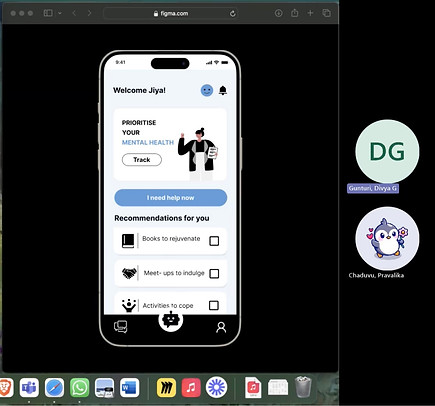
I conducted feedback testing with five participants to evaluate the MVP’s feasibility. They followed the think-aloud method and shared verbal feedback after completing tasks."

Blurred for privacy reasons
Key Points from Participants
"Yeah, the rest was all good. It's a simple, professional interface—easy to understand, with nothing overly complicated. That's a great thing."
The user flow is nice and clean and the colours are like appealing.
I think it's quite good. I really like the design of the app. It's quite clean and very well.
Hi - Fidelity Wireframes & Prototype
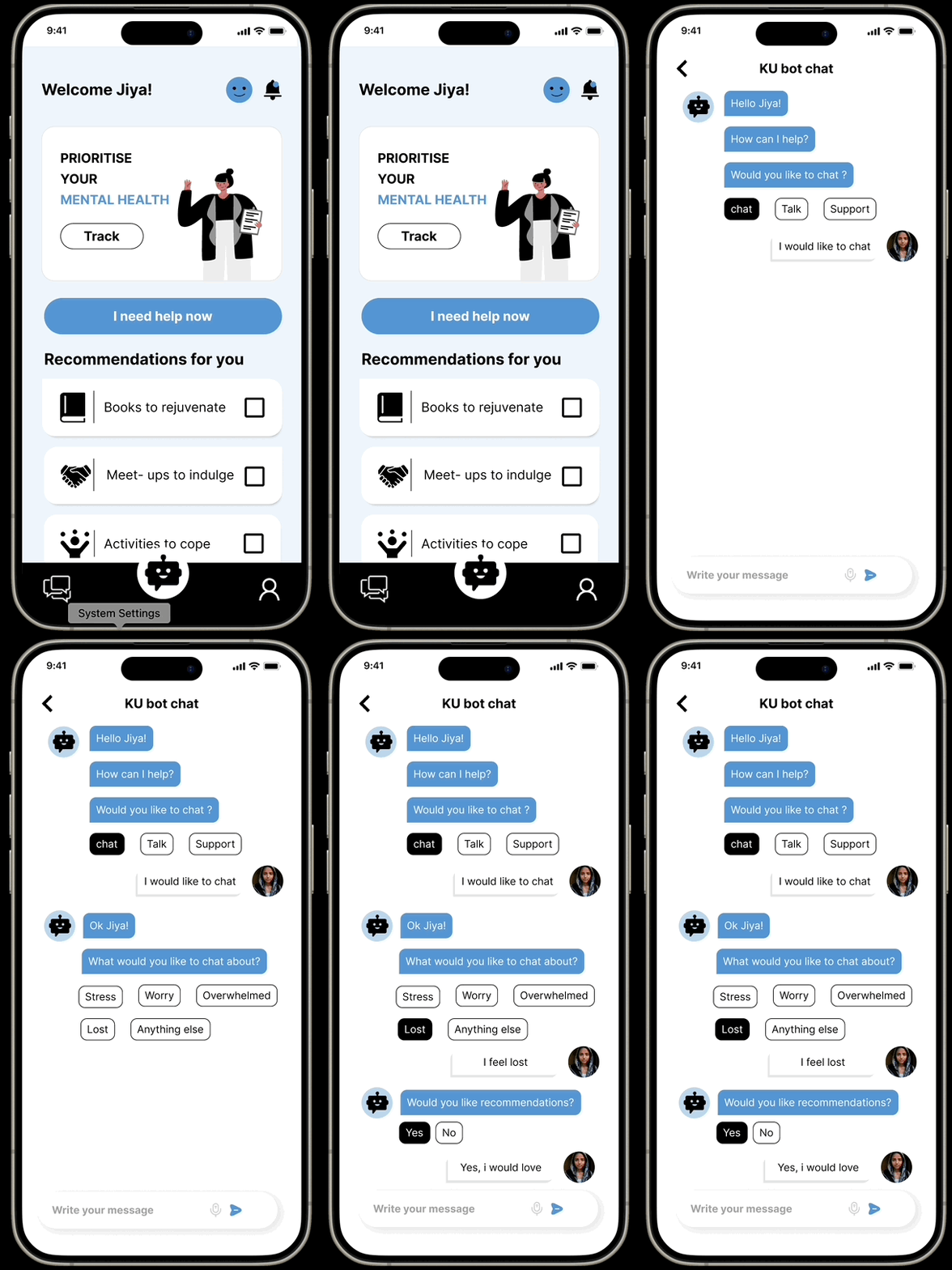
KU Chat Bot
AI chat that listens, supports, and guides you—offering instant help without relying on anyone.
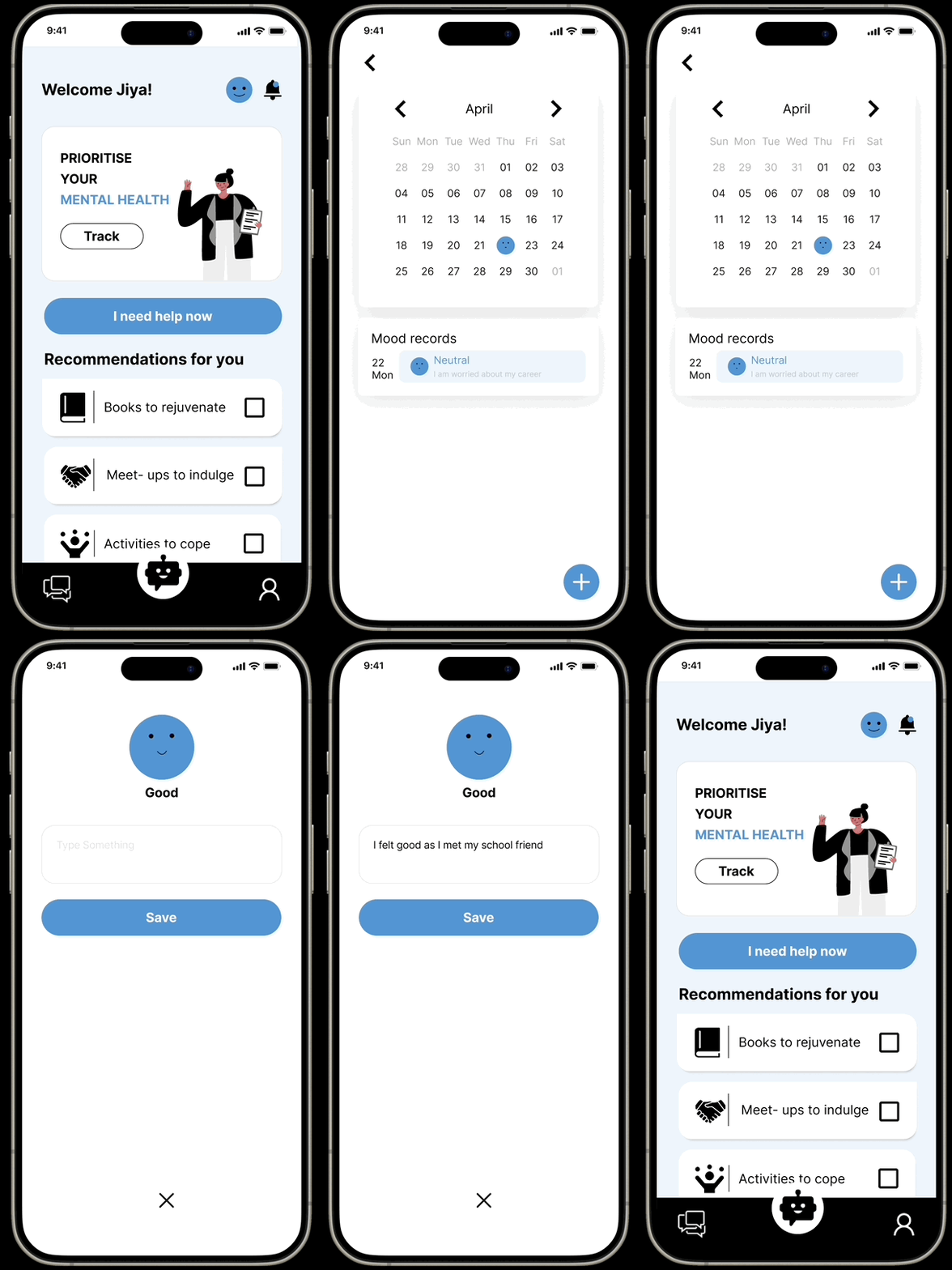
Tracking feelings
Manually track your feelings to reflect, understand, and gain insights over time.
Recommendations
Get quick and personalized recommendations effortlessly.
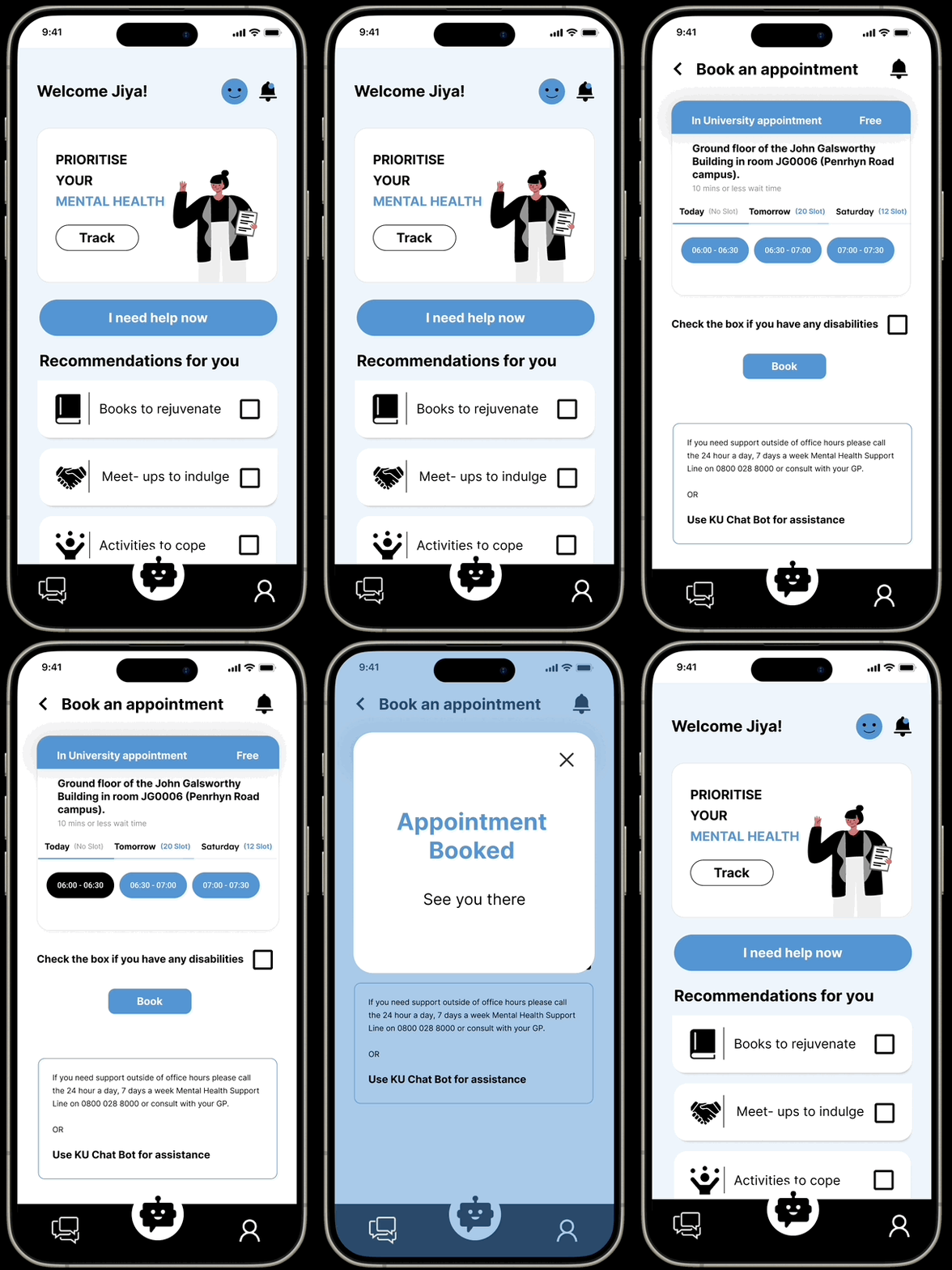
Quick help
Get instant help whenever you need it.

Calculation and Validation
"Usability test data is collected, mean values are calculated, and task success rates are measured for each task."

The usability testing result is 80+, indicating no changes are necessary.
Discussion and Conclusion
I learned that:
Role of Assumptions: Assumptions are key in Lean UX but can reduce focus on user needs in the early stages as business goals take priority.
Rapid Development: Lean UX allows for fast development by creating an MVP and quickly testing hypotheses, accelerating the project timeline.
Feature and Testing Insights: Features like chatbots and personalized recommendations meet both business and user needs, with usability testing providing valuable feedback.