Farm Buddy
Designing an app for plant growers of any level.
Ok. Background first! Farm Buddy is envisioned by myself as I always wanted to create a platform that could empower users to grow their own food My vision to promote sustainable living by prioritizing health serves as the foundation for this idea.
My role
UI/UX Design
| User Research, Sketching,
Prototyping, Usability Testing
Team
Me:)
Duration:
2 months
AUTO ENTHNOGRAPHY
"My aunt's struggle with cancer, caused by poor food practices, pesticide misuse, and the lack of proper knowledge as a busy farmer, along with concerns about food coming from a highly polluted town, inspired me to create Farm Buddy. These experiences highlighted the need for awareness in food safety and sustainable farming practices, by everyone, even in small ways."
There is a critical need for more sustainable practices due to their harmful impact on the environment and human health.
According to my personal experiences, there are a lot of difficulties with traditional agricultural techniques, especially when it comes to managing resources likefertilisers.
By offering real-time data, maximising resource utilisation, and encouraging ecologically responsible decision-making in agricultural processes, this autoethnography explains how a farming app could be able to address theseproblems.
The Aim
The aim is drawn towards designing an app which is composed forany level of farmer and then prototype a digital platform whichsupports in major aspects of farming or growing plants

✒️ Research first
Key Research Insights
Reports say that growing own food has significant health impacts
Lowers dependence on industrial agriculture, which contributes 19-29% of global greenhouse gas emissions.
However, there are risks if the chemical fertilisers are improperly used and if foodhandling practices are not followed.
👩💻 Interviews Now
Semi-Structured Interviews
A semi-structured user interview was conducted to gather insights on plant maintenance routines, challenges, and the usefulness of digital tools. The interviews allowed for natural conversation, revealing user preferences, problems, and areas for improvement. The information gathered is crucial for improving the app's usability and adjusting it to better suit user demands.


No videos were told to on due to privacy concerns
👀 Observation starts...
Observation Study
An observational study was necessary to understand user behaviour and daily practices as plant growers to develop targeted solutions.
Some of the observations

⏰ Lets refine the research
Affinity Mapping
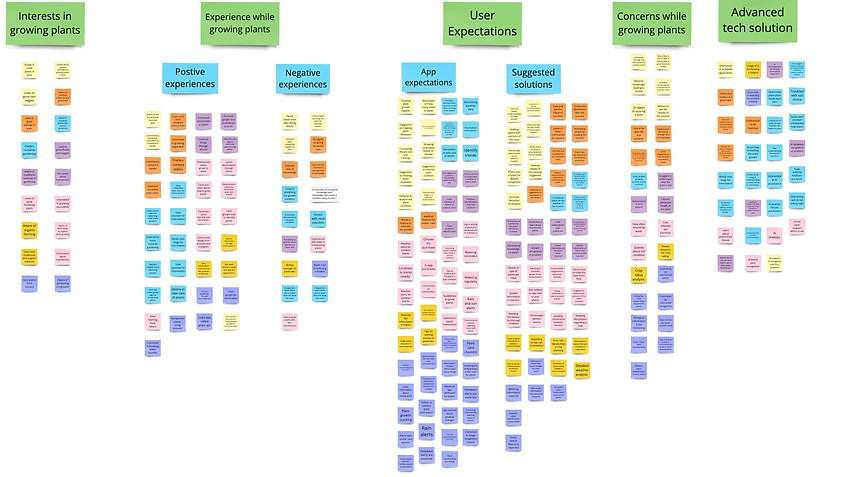
Information is gathered using interviews and then organised using sticky notes collectives based on similarity
🧠Lets refine the research
Empathy Maps
Empathy maps were built to visualise user’s feelings, actions and thought process in connection to a product service, scenario, offering a view of their own perspective.
These facilitated in the research stage and design by understanding the causes and pain points that influence a user’s behaviour by integrating components .
"The utilisation of these helped in aligning design effort with the needs of the user and improving the effect of solutions."
No need to scroll endlessly for this project—just swipe and check all the empathy maps effortlessly. Ta-da!😊

🤩Moving forward by defining the research!
Personas
Empathy maps were built to visualise user’s feelings, actions and thought process in connection to a product service, scenario, offering a view of their own perspective


✏️ Wrote some narrative scenarios
Narrative scenarios
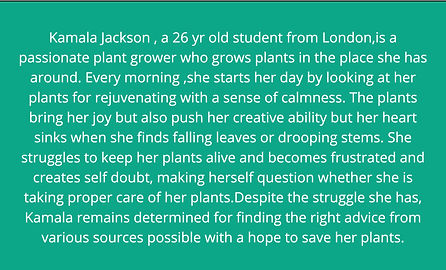
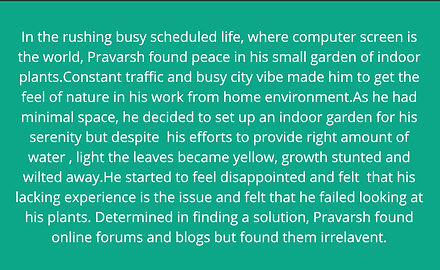
These are the key steps in building narrative scenarios that guide a user-centered design approach
User Profile – Understanding demographics and psychographics.
Navigation & Challenges – Tracking user actions and roadblocks.
Experience & Feedback – Assessing efficiency, ease of use, and overall satisfaction.

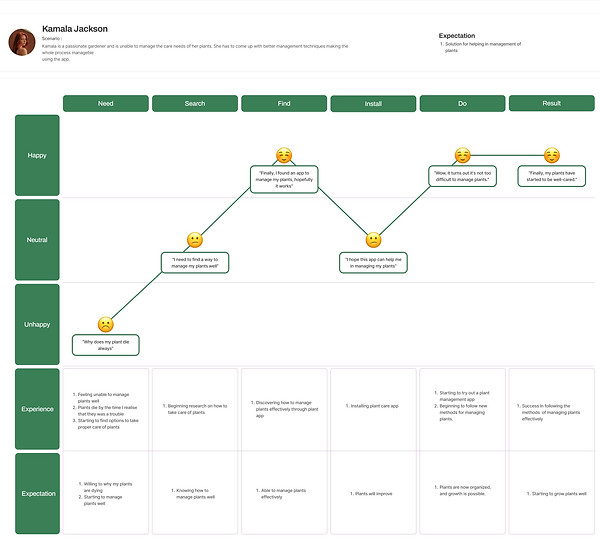
📍"Started mapping the adventure from click to satisfaction!"
User Journey Maps
These maps facilitated the creation of plans and solutions that are centered around the needs and preferences of users by providing insights into their behavior.
Structuring these maps played a key role in the study of user experience design, offering an in-depth comprehension of user interactions and opening the door for creative solutions catered to the requirements of the target users. The following are the user journey maps for the project.
No need to scroll endlessly for this project—just swipe and check all the journey Maps effortlessly. Ta-da!😊
🙇🏻♀️ Gathering POV Statements
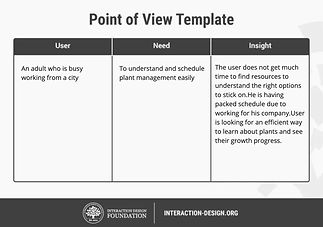
POV Statements
Each POV statement was designed to zoom in on the specific goals and needs of every user group, making sure we’ve got everyone’s back!😉


🤔 Whys and hows
4W's and 5 Why's
We actually used the 4 W’s (Who, What, Where, Why) and the 5 Whys technique to dig into user needs and uncover the root causes of their problems. This way, the app is not only user-focused but also solves the real challenges for the target users.
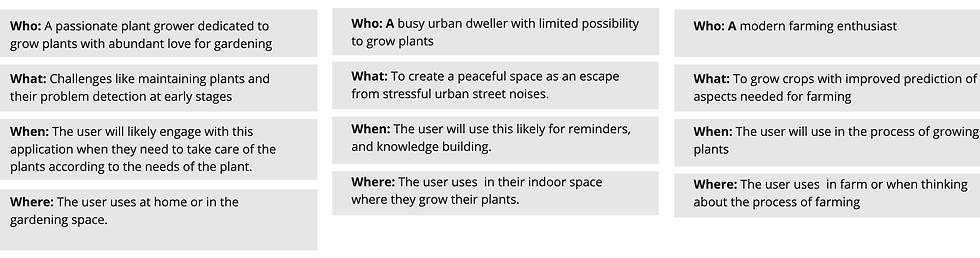
We put the 5 Whys to the test—questioning every challenge until we uncovered the root cause, ensuring a seamless and user-friendly experience! 🔍📱✨

🤿 Deeper dive into users needs
User Stories

Competitive Analysis
🏃🏻♀️ Knowing our competition
I conducted a competitive analysis to get a clear understanding of what’s available in the market, exploring key features and trends in plant and agriculture apps to identify opportunities and differentiate Farm Buddy from various platforms available online.
As, we know as as now, farm buddy is for any level of farmering enthusiast

💡 Ideating what is defined!
How might we...
This structured approach to ideation is aimed at developing innovative solutions that address the key challenges to be addressed by farm Buddy

I structured the how might we questions for all the personas identified to narrow down the solutions. This method helped to ensure that the final solution is tailored to each user type.
Crazy 8's
Tick, tick – 8 ideas in 8 minutes! The Crazy 8’s method pushed me to rapidly sketch out diverse solutions for each "How Might We" question, fostering creativity and helped me to generate a wide range of ideas in no time.

Worst Idea Generation
The worst idea generation method, turned out to be surprisingly thrilling, as it pushed the boundaries to create a solution for a broad and diverse audience of Farm Buddy.

😜 Reaching towards the favourite part
Site Map
Voila! A well-organized sitemap is like a roadmap, guiding each persona to exactly what they are looking for.

🔎 Filtering what we truly need
NUF Test

✏️ Structuring the visual structure
Low-Fi Wireframes
Low-Fidelity Design Exploration: To visualise important features and user flows, wireframes, sketches, and simple prototypes are used to investigate early design concepts for the Farm Buddy app.
User Testing & Feedback: To obtain feedback, improve usability, and enhance the overall user experience, four people evaluate low-fidelity screens and functionality.


🌈 Finally the favorite part sets in
Moodboard and Style Guide:
A Fresh Design Opportunity - With no previous branding, there was an obvious opportunity to create a unique visual approach for the Farm Buddy app.
Creating a Lasting Design System - Significant effort was put into logo creation, branding, and design direction, with typefaces and visual elements thoroughly evaluated to ensure they matched the brand's personality and resonated with the intended audience. The moodboard featuring typefaces, colors, textures, and imagery, helped define the app’s emotional and visual tone.
The style guide delivers a consistent and user-friendly experience throughout the high-fidelity stage of the Farm Buddy app by standardizing design components, workflows, and user interactions.

Modern & Approachable : Clean, geometric, yet warm—perfect for a farming app.
Versatile: Several weights for a smooth user interface.
Highly Readable : Balanced letterforms make it easy to read at any size.
Professional & Free: An excellent open-source option.

Green and brown hues emphasise in the earthy colour scheme of the Farm Buddy moodboard, which reflects a natural and minimalist approach. The colours and textures chosen in the app are intended to evoke a sense of calm and a connection to nature, which is consistent with its objective of supporting farmers and plant producers.
🧑🏻🦯➡️Making sure its for everyone
Accessibility:
To ensure reading and use, the application's interface complies with accessibility standards, especially for users who are colour blind or have limited vision..


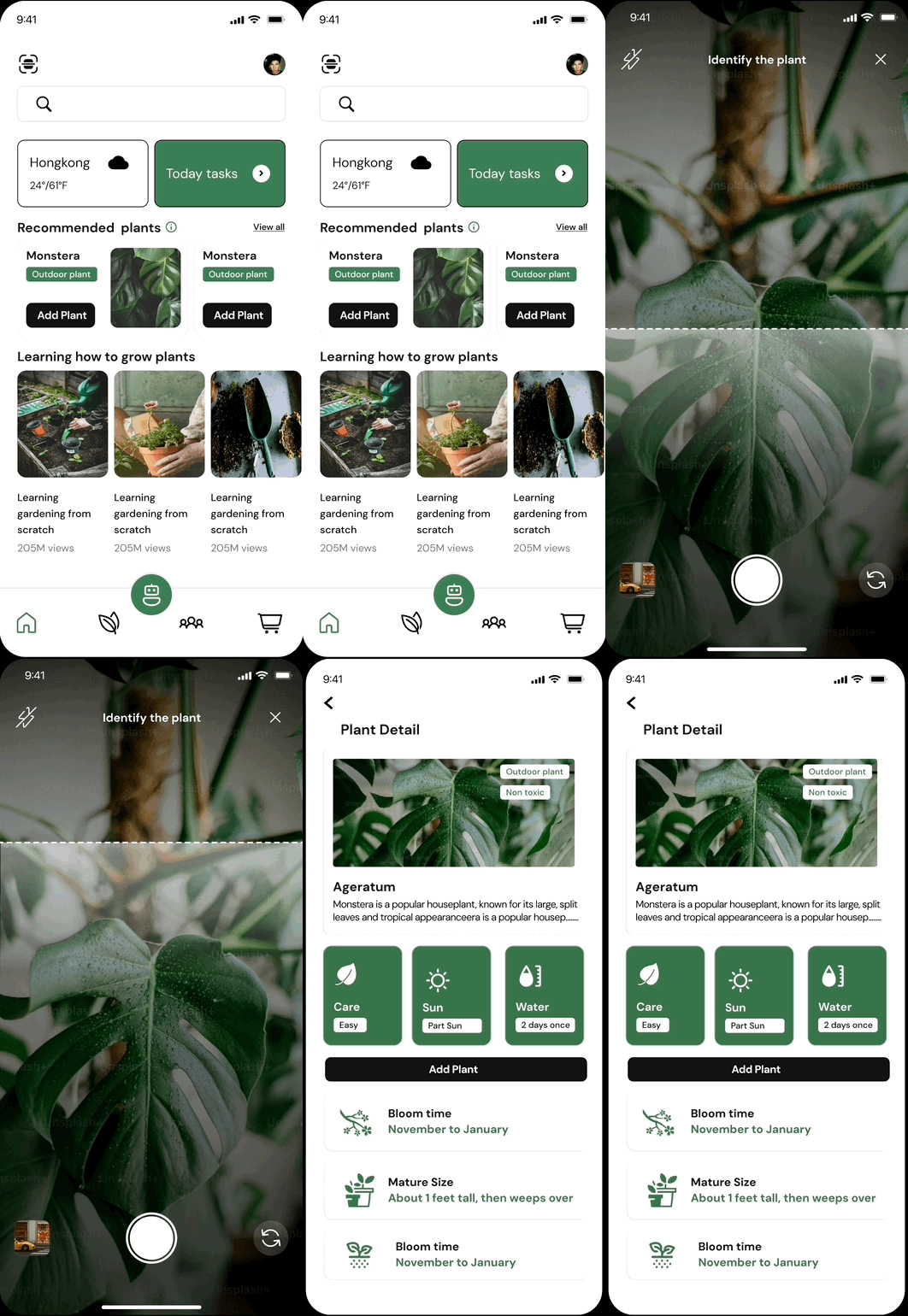
Hi-Fidelity Wireframes
💡 Results getting visualised
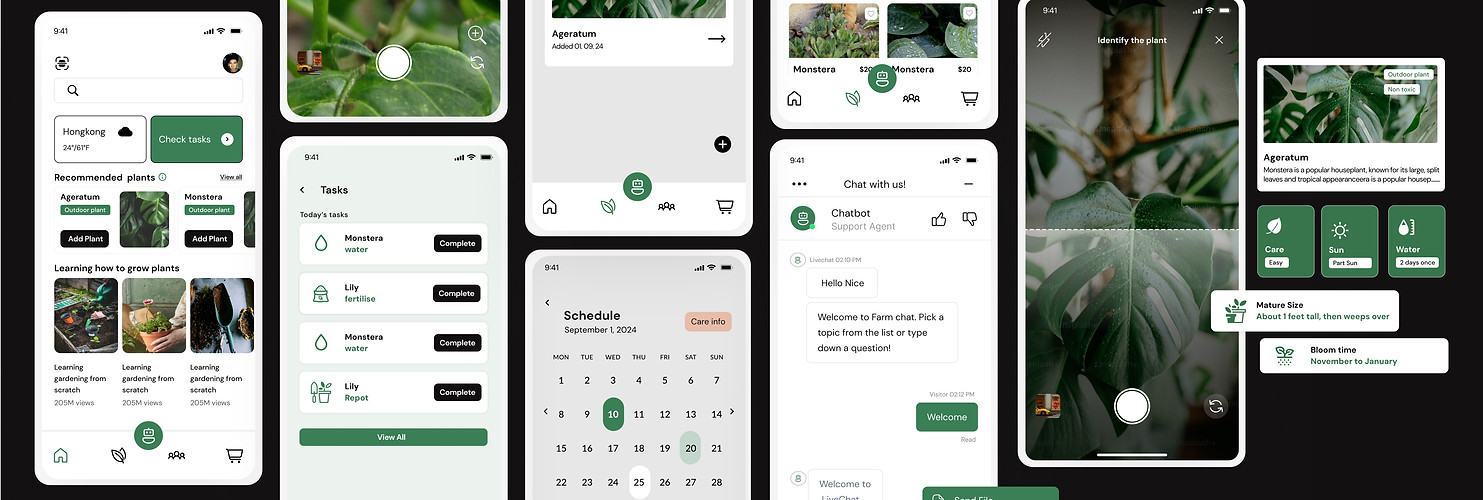
Plant Identification and detailed information of plant


Hi-Fidelity Wireframes
Educational Content

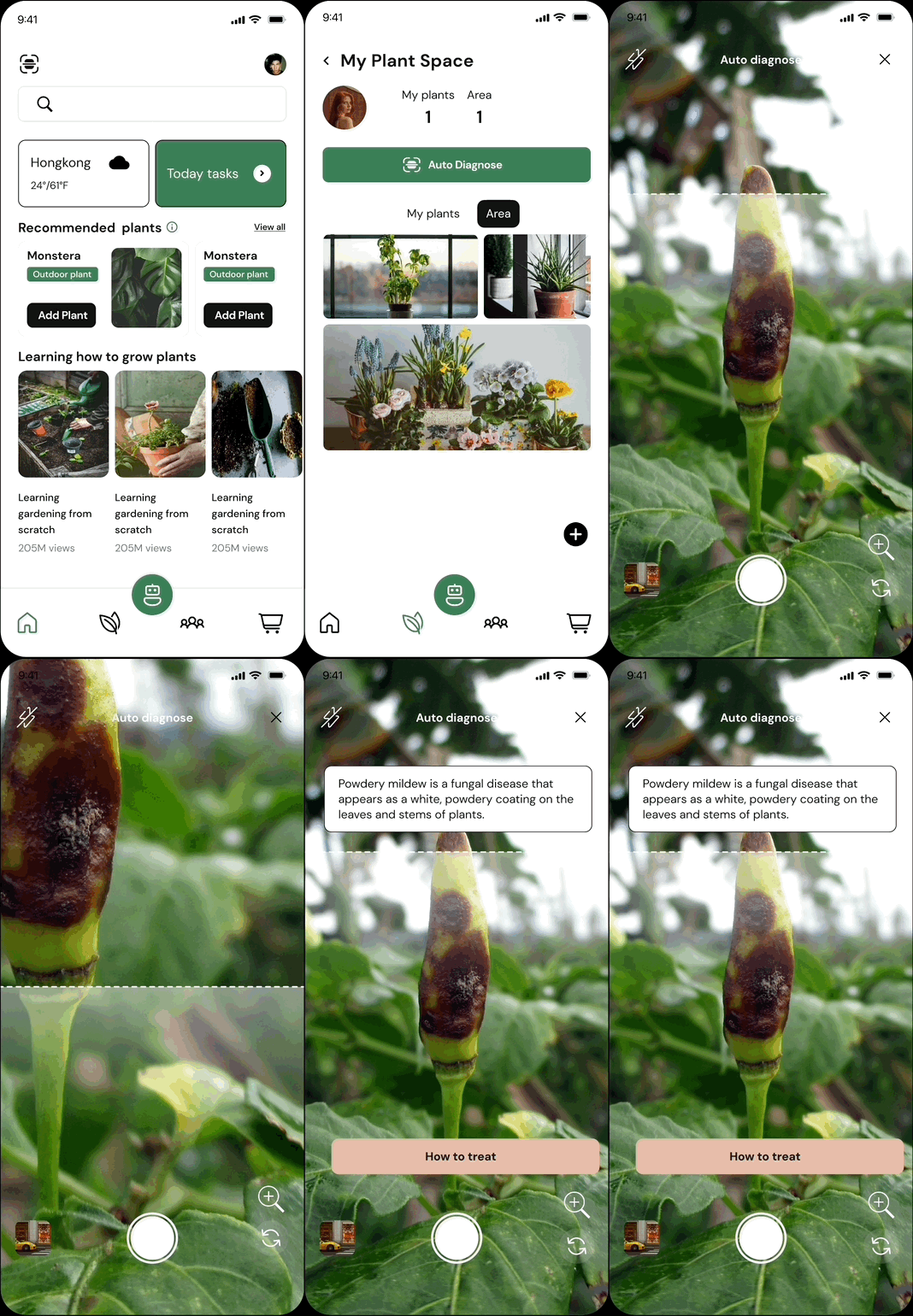
Auto - Detection Feature



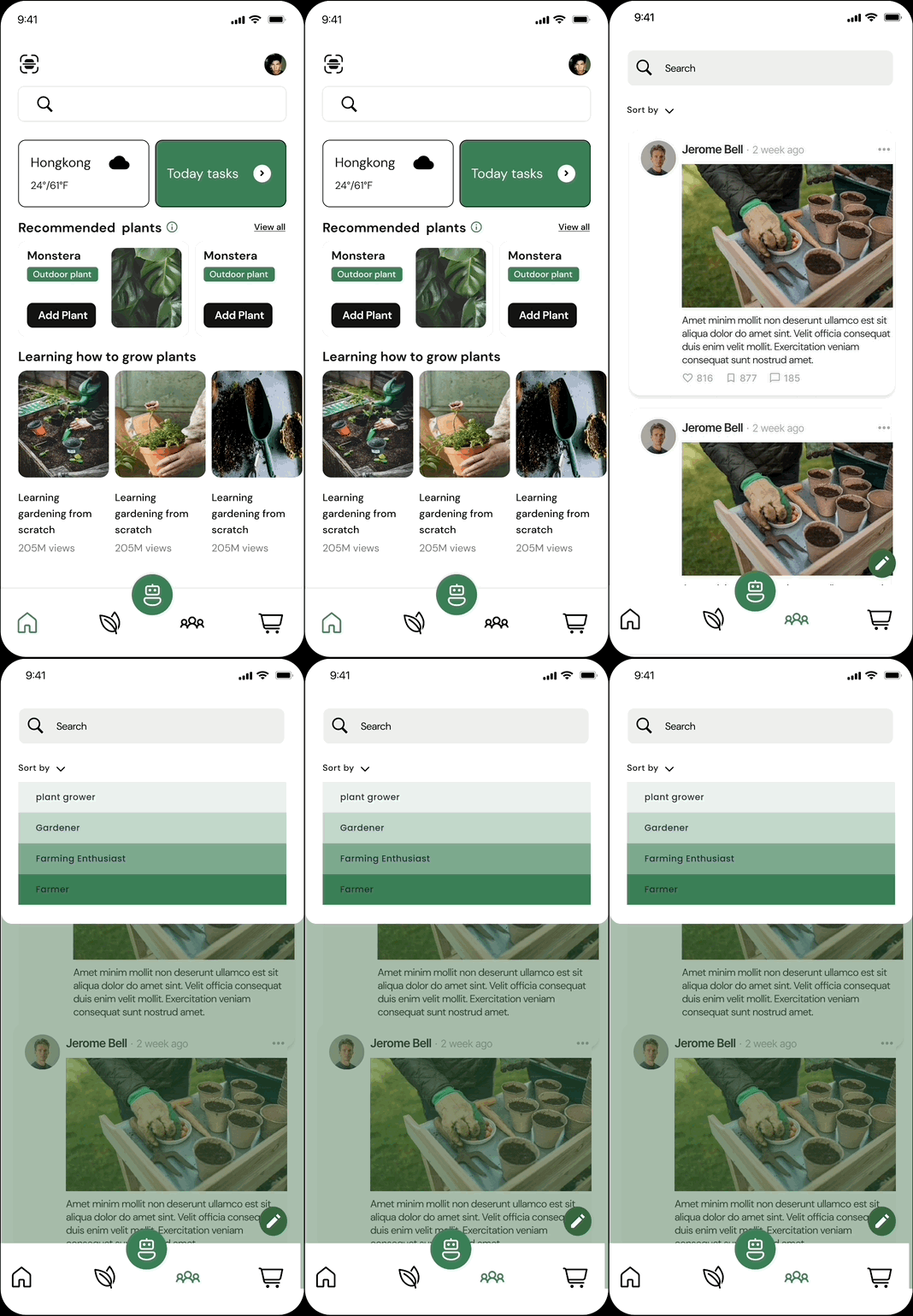
Community Feature


👩💻 5-Act Interview: Uncovering Insights, One Story at a Time.
5 Act Interview
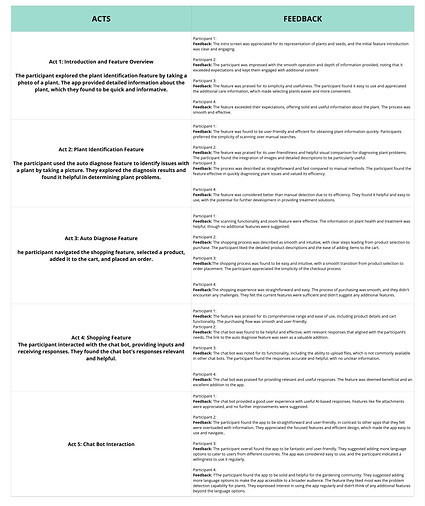
5 act interview was conducted and feedbacks are collected from four participants.
Usability has been enhanced by incorporating 5-act interview input to guide the improvement process. The development encourages accessibility, diversity, and cultural awareness by supporting multiple languages.
An iterative process guarantees flexibility, improving the program to successfully satisfy user needs.